What does DevOps mean?
DevOps is a methodology in software development that merges Development (Dev) and **IT Operations
(Ops)** to automate and optimize the entire process of software creation, testing, deployment, and maintenance.
It emphasizes collaboration, automation, and ongoing enhancement, enabling organizations to deliver software more
rapidly, efficiently, and with fewer mistakes.
DevOps incorporates Continuous Integration/Continuous Deployment (CI/CD), Infrastructure as Code (IaC),
monitoring, and automation to guarantee smooth building, testing, and release of software.
Who is a DevOps Engineer?
A DevOps Engineer is a specialist who blends software development (Dev) expertise with **IT
operations (Ops)** skills to enhance and streamline the software development, testing, and deployment workflows.
Their objective is to ensure fast, efficient, and dependable software delivery. They focus on automating and
integrating workflows between development and IT teams, enabling continuous integration and continuous delivery of
software.
Which programming and scripting languages are essential to learn for becoming a DevOps Engineer?
To become a proficient DevOps Engineer, mastering both programming and scripting languages is crucial.
The recommended languages include:
Programming languages:
- Golang
- Java
- Ruby
Scripting languages:
- Bash
- Python
- Groovy
- Powershell
What is the purpose of SSH?
SSH (Secure Shell) is a cryptographic network protocol that enables secure communication between two
systems over an unsecured network. It encrypts data transmissions, protecting sensitive information like passwords and
commands from interception.
SSH allows users to:
- Remotely log in and control servers securely from any location.
- Transfer files safely using tools such as `scp` or `sftp`.
- Perform port forwarding and tunneling to create encrypted channels for other applications.
- Automate logins using SSH keys, facilitating seamless execution of scripts and configuration tools like Ansible.
Can you explain what CI/CD stands for?
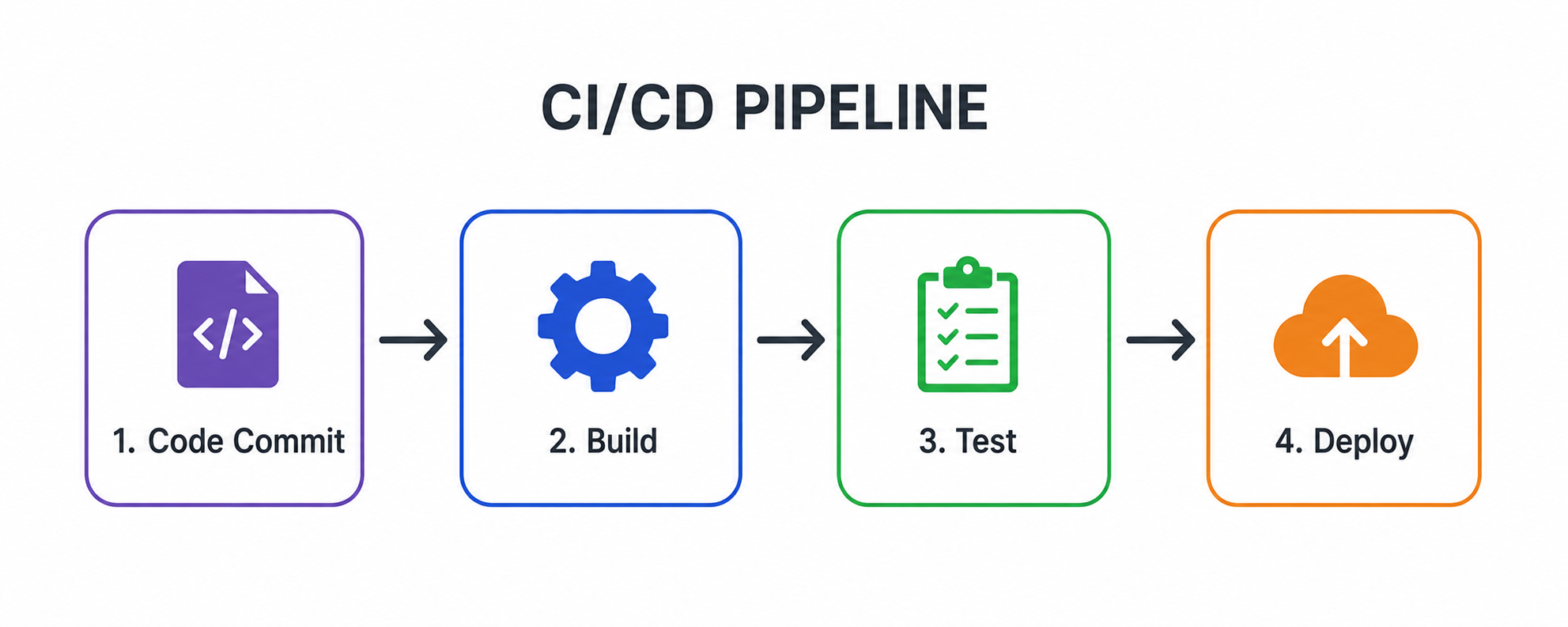
CI/CD refers to automating the integration of code changes from multiple developers into a shared
codebase. It is a development practice where developers frequently commit their work to a central repository (like
GitHub or Stash).
Continuous Integration involves developers committing regularly to a shared repository via version control (e.g.,
Git). Automated pipelines then build, store artifacts, run unit tests, and conduct code reviews using tools such as
Sonar.
Continuous Delivery enables developers to test code in production-like environments to avoid last-minute
surprises. It includes UI testing, load testing, integration testing, and helps identify and fix bugs proactively.
How do Horizontal Scaling and Vertical Scaling differ?
Horizontal Scaling
This involves adding more machines or servers to distribute the workload. Instead of upgrading one server, multiple
servers share the load.
It's like opening more checkout lanes in a store to serve more customers simultaneously. This approach handles high
user traffic efficiently, with the ability to add servers as needed.
It also improves reliability—if one server fails, others continue functioning. However, managing multiple servers is
complex and often requires load balancers to distribute traffic evenly.
Vertical Scaling
This entails enhancing the capacity of a single machine by adding more memory, faster CPUs, or larger storage.
It's similar to upgrading your personal computer's hardware to boost performance without changing the machine itself.
This approach is simpler to manage and suits applications with steady traffic.
However, there are physical limits to upgrades, and server restarts during upgrades might cause short downtime.
What is the Blue/Green Deployment strategy?
Blue/Green Deployment involves deploying two versions of an application simultaneously: a stable version
and a new version with features or fixes. Traffic is routed partially to the new version to verify its stability in
production.
Blue Deployment is the primary and stable production version.
Green Deployment is a clone with new changes, receiving some traffic to test. If issues arise, they can be fixed
before promoting Green to Blue, minimizing production failures.
How do DevOps and Agile methodologies differ?
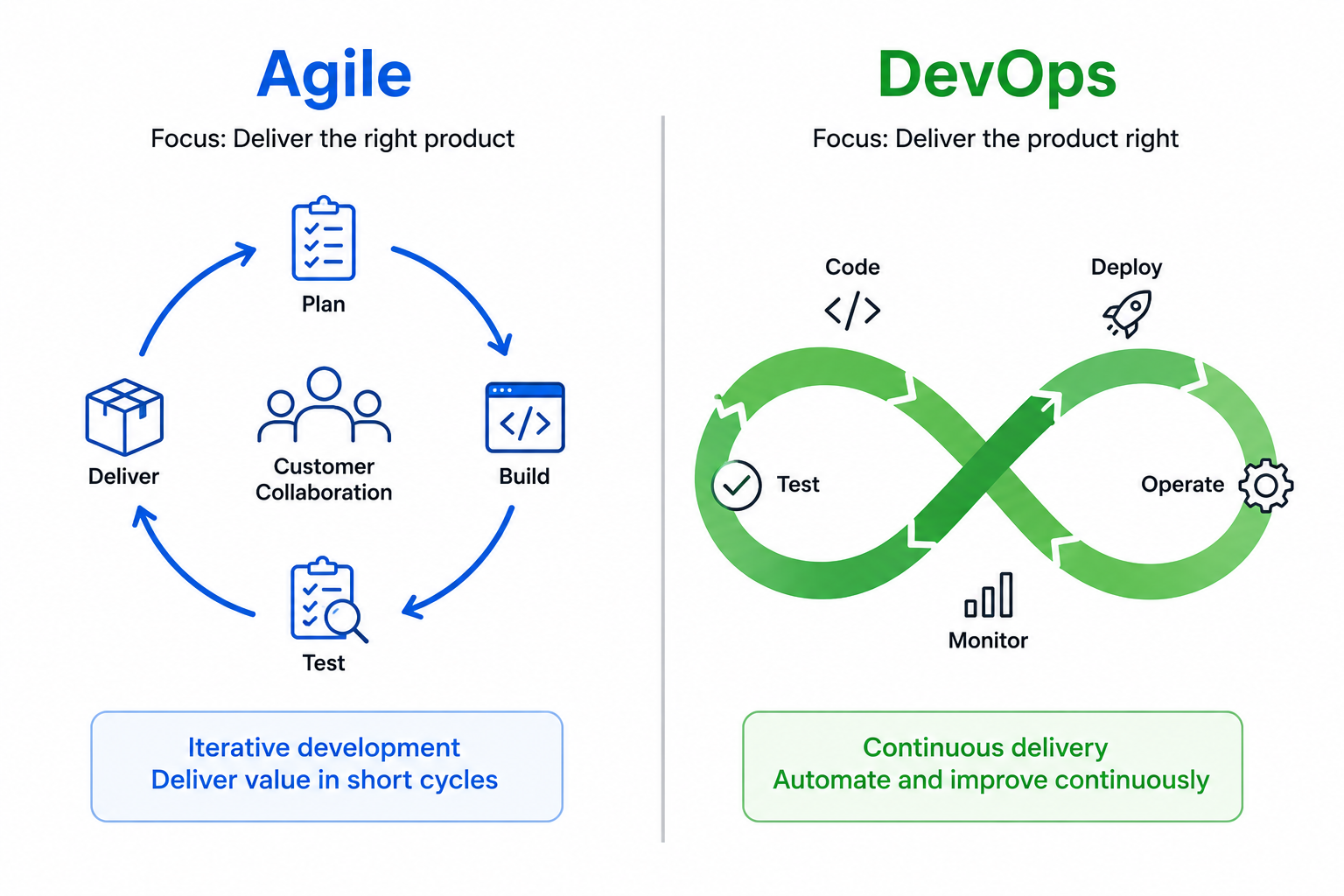
Agile is a methodology focused on the development process, emphasizing iterative and flexible planning. It is about how software development is organized, applicable across departments with a focus on continuous improvements.
DevOps, on the other hand, emphasizes continuous testing and deployment, focusing on reliably delivering software. It is more about software deployment and infrastructure management, selecting the safest and most dependable paths.
What is involved in the continuous testing process?
Continuous testing is the automated process of executing tests on software continuously as soon as
developers submit code. Testing occurs at every phase, from early development stages through deployment, ensuring
quality throughout.
What role does AWS play in DevOps?
AWS plays a significant role in DevOps by providing services for automating CI/CD pipelines,
Infrastructure as Code (IaC), container orchestration, monitoring, and security, streamlining software development and
deployment.
Services like AWS CodePipeline, CodeBuild, and CodeDeploy facilitate automated CI/CD workflows. **CloudFormation
and Terraform enable infrastructure provisioning. Amazon ECS, EKS, and Fargate** manage containers, while
CloudWatch, X-Ray, and CloudTrail provide monitoring and security.
Additional tools like Auto Scaling, ELB, and AWS Lambda enhance scalability, availability, and serverless
computing. Integration with Jenkins, GitHub, and Terraform makes AWS a cost-effective and efficient cloud DevOps
platform.
What is meant by Configuration Management?
Configuration Management refers to the process of controlling and documenting changes within a
development system. It is part of change management and allows large teams to collaborate in a stable environment
while retaining flexibility for innovation.
How would you define Infrastructure as Code (IaC)?
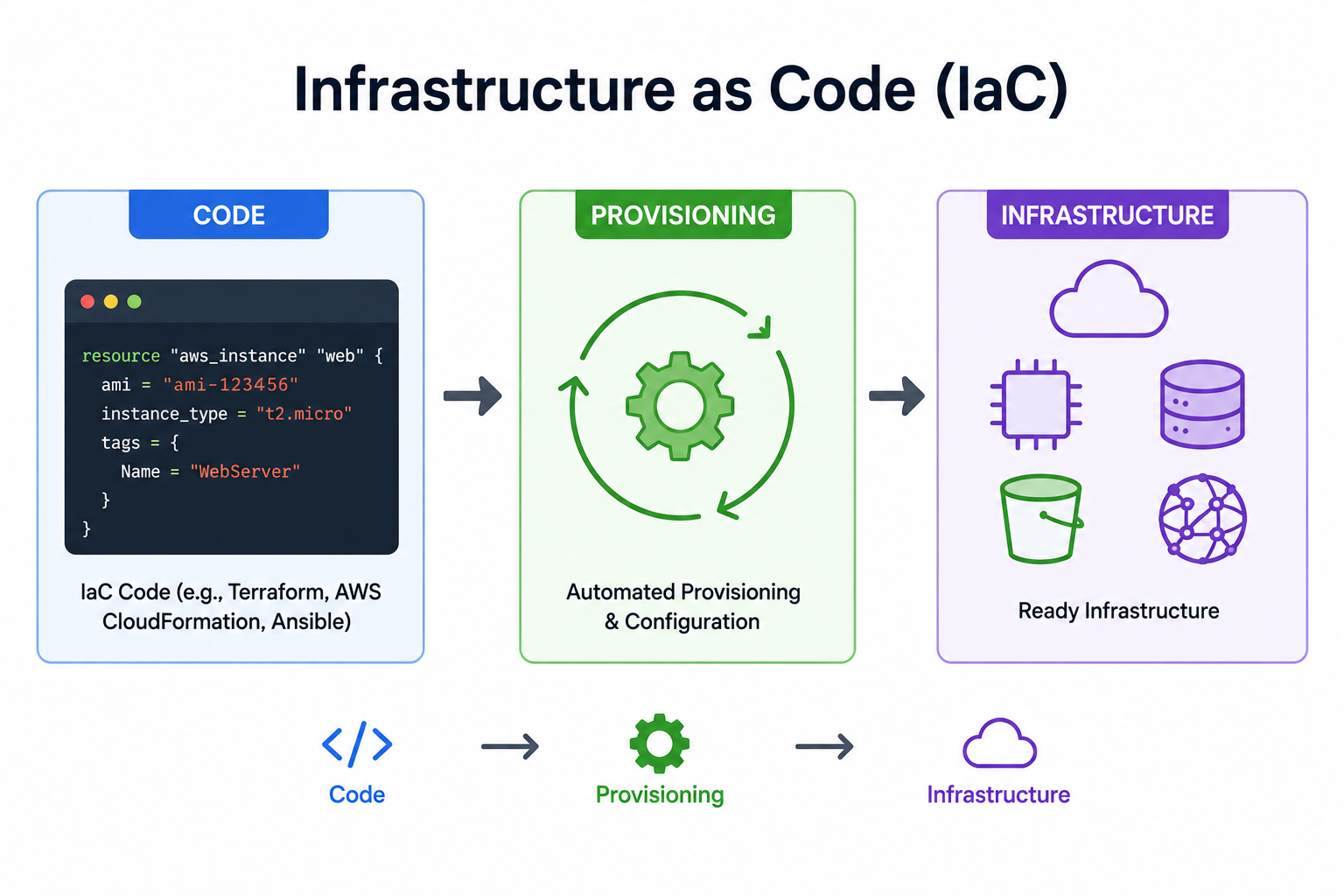
Infrastructure as Code (IaC) is the practice of managing and provisioning IT infrastructure through code
rather than manual configuration. This enables automation, consistency, and efficiency, especially useful in DevOps
environments where infrastructure frequently changes.
Instead of manual setups, desired infrastructure is defined via code files using tools like **Terraform, Ansible, or
CloudFormation**. These code files can be version-controlled, reused, tested, and automated like application code.
Benefits of IaC include:
- Consistency: Identical configurations every time, reducing errors.
- Automation: Quick environment setup and teardown.
- Scalability: Easily adjust infrastructure by modifying code.
- Versioning: Track and revert changes using version control systems.
Could you explain the concept of branching in Git?
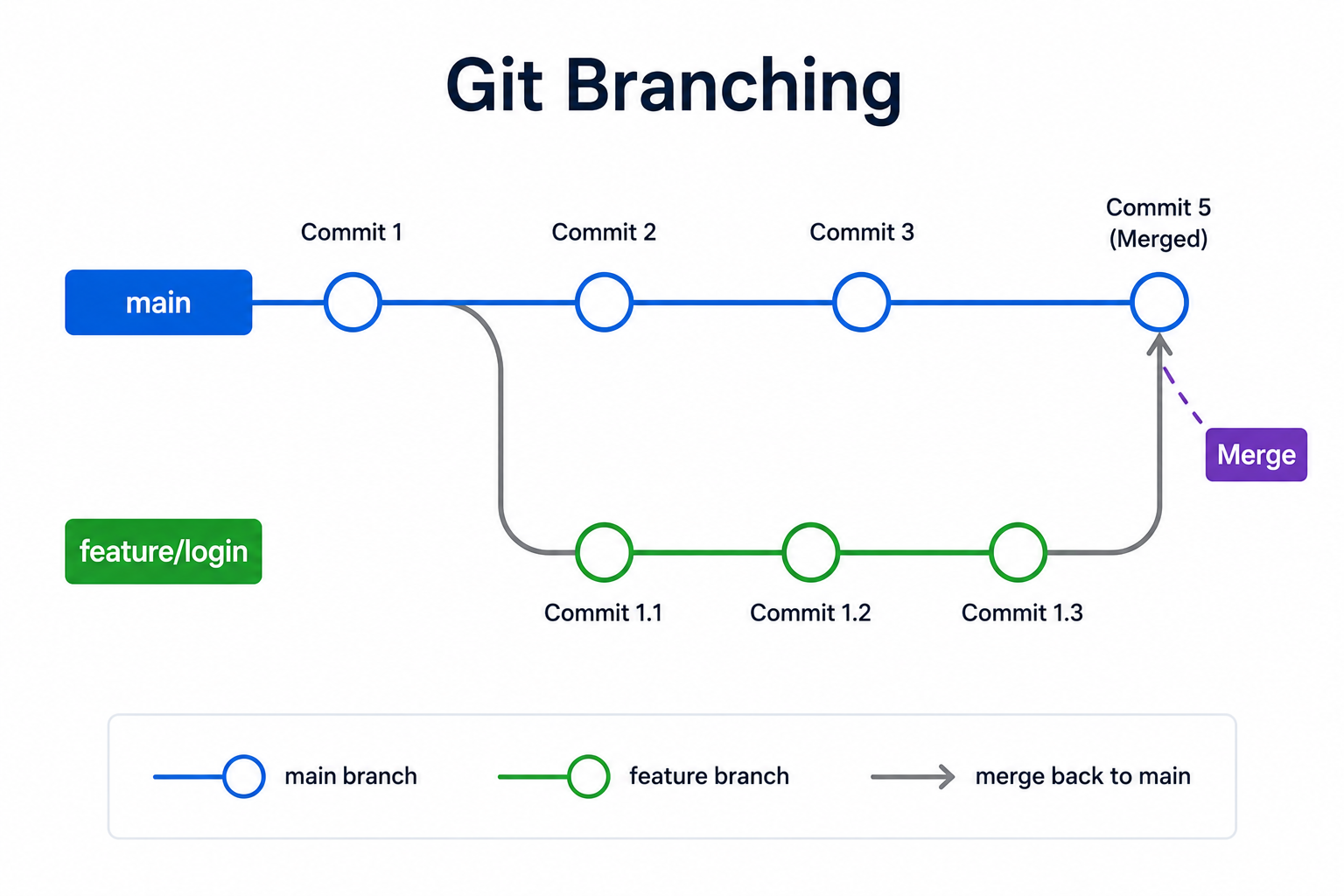
Branching in Git allows creating separate development lines within a project. A branch acts as a pointer
to a specific commit in the Git history.
By default, Git starts with a main branch (`main` or `master`). Creating a new branch copies the project's
history, allowing development of new features or fixes without affecting the main codebase.
Branches operate independently until merged, enabling parallel development by multiple developers. Common strategies
include Feature Branching, Git Flow, and Trunk-Based Development.
Example:
- `main` branch contains stable code.
- `feature/login` branch is used for a new login feature under development.
After testing, `feature/login` merges back into `main`.
What does Git stash do?
The Git stash command allows a developer to save changes temporarily without committing them. This helps
switch branches or work on other tasks without losing current modifications. The stash stores the current working
state and can be reapplied later when needed.
What is a Git Repository?
A Git repository is a storage location containing a project's files and their version histories. The
repository enables importing files to a local machine for updating and modification. Version Control Systems (VCS)
create and manage these versions, storing them centrally in the repository.
Can you name three key KPIs in DevOps?
Three crucial DevOps KPIs include:
- Deployment Frequency (DF): Measures how often new code is released to production. Higher frequency indicates
faster delivery.
- Mean Time to Recovery (MTTR): Tracks how quickly the system recovers from failures. Faster recovery means better
resilience.
- Change Failure Rate (CFR): Percentage of deployments causing issues in production. Lower rates indicate stable
releases.
Monitoring these KPIs helps teams enhance release speed, fix problems promptly, and maintain quality.
What is Jenkins?
Jenkins is an open-source automation server designed to build, test, and deploy software. Written in
Java, it runs on the Java Runtime Environment (JRE). Jenkins automates Continuous Integration (CI) and Continuous
Delivery (CD) by handling repetitive tasks throughout the software lifecycle.
Supporting hundreds of plugins integrating with tools like Git, Maven, Docker, and Kubernetes, Jenkins is highly
adaptable. It helps developers detect issues early, improve code quality, and accelerate delivery by automating
workflows from code commit to production.
What is the function of the cherry-pick command in Git?
Git cherry-pick allows selecting a specific commit from one branch and applying it to another branch.
Unlike merge or rebase, which typically apply multiple commits, cherry-pick focuses on individual commits.
The command syntax is:
`git cherry-pick <commit-hash>`
What does the sudo command do in Linux?
The `sudo` (Super User DO) command in Linux runs commands with elevated privileges. Prefixing a command
with `sudo` executes it as a superuser or another authorized user, similar to "Run as administrator" on Windows. It
allows users with proper permissions to perform administrative tasks.
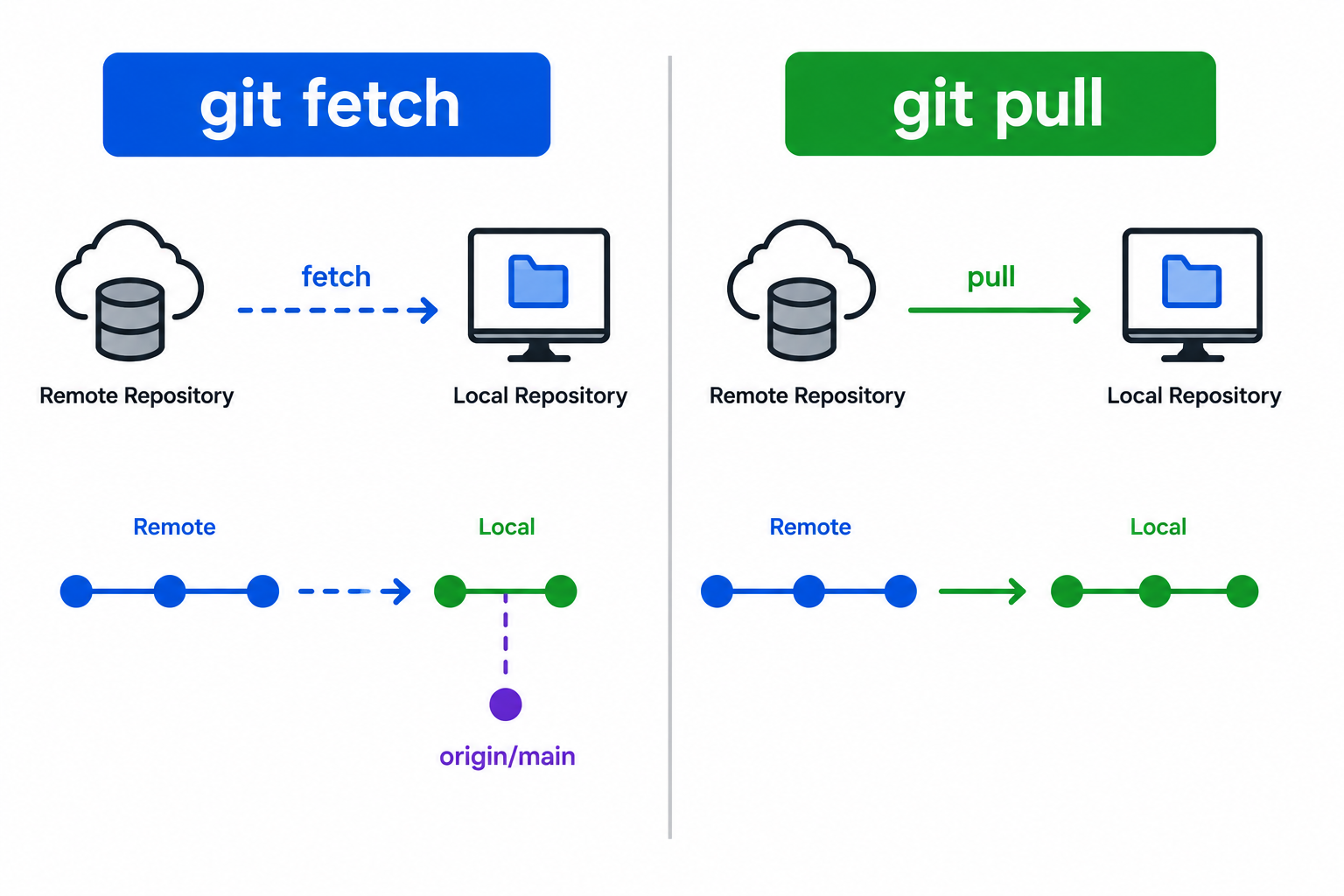
What is the difference between Git fetch and Git pull?
Git fetch downloads changes from a remote repository to the local repository without merging them
into the working directory. It updates repository data for review but does not affect current files.
Command: `git fetch <remote>`
Git pull fetches changes and automatically merges them into the current working directory, updating files
immediately.
Command: `git pull <remote> <branch>`
What are the main components of Selenium?
Selenium is a robust tool for automating web browsers. It supports all major browsers and operating
systems, with scripts written in languages like Python, Java, and C#. The four main Selenium components are:
- Selenium IDE
- Selenium RC
- Selenium WebDriver
- Selenium Grid
What role does Puppet play in DevOps?
Puppet is an open-source automation tool for configuration management. It allows administrators to define
infrastructure as code using Puppet's domain-specific language instead of custom scripts. Puppet ensures systems
revert to desired states if altered accidentally.
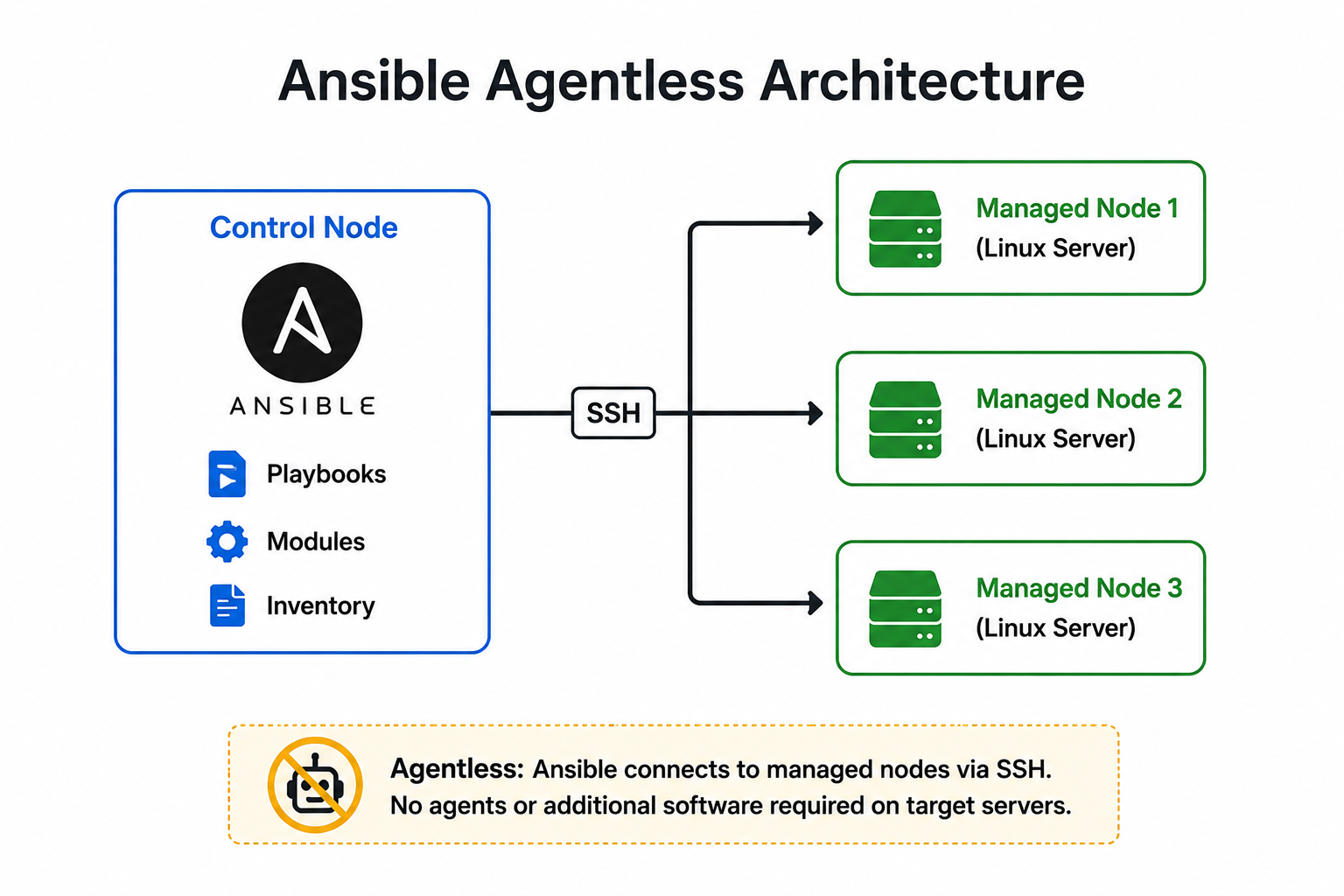
What is Ansible?
Ansible is an open-source automation tool for configuration management, application deployment, and task
automation. It allows admins and DevOps teams to manage many servers from a central machine without installing agents.
Key features:
- Agentless: Operates over SSH, no client installation needed.
- Uses YAML playbooks for simple, human-readable automation.
- Scalable from few to thousands of servers.
- Versatile for provisioning, patching, orchestration, and cloud automation.
Example: Deploying a web app across 50 servers with one command ensures uniform configuration.
How would you define Automation Testing?
Automation Testing involves writing scripts to test software automatically, replacing manual testing. It
allows repetitive tasks to be executed without human intervention, increasing efficiency and consistency.
Why is continuous feedback important in DevOps?
Continuous feedback in software development is an iterative process where constant reviews, comments, and
critiques are provided throughout the development lifecycle. It ensures developers receive timely insights into code
quality and functionality, promoting improvements and minimizing defects.
What is Git Bash?
Git Bash is a command-line interface for Windows that enables users to interact with Git, the version
control system. Tasks like cloning repositories, committing changes, and pushing/pulling updates are performed through
Git Bash. It also supports scripting to automate manual tasks and helps users learn Git commands.
What does Git squashing mean?
Git squashing combines multiple commits into a single commit to clean up history and maintain an
organized timeline. It's typically done before merging feature branches or creating pull requests.
What causes a merge conflict in Git?
A merge conflict happens when two developers modify the same file or the same lines of code on different
branches, causing conflicts during merging. These conflicts must be resolved manually before completing the merge.
What is the purpose of Git prune?
Git prune removes objects that are unreachable from any branch, cleaning up unneeded files in the
repository. It helps maintain a tidy working directory after project work is done.
Command example:
`git fetch --prune`
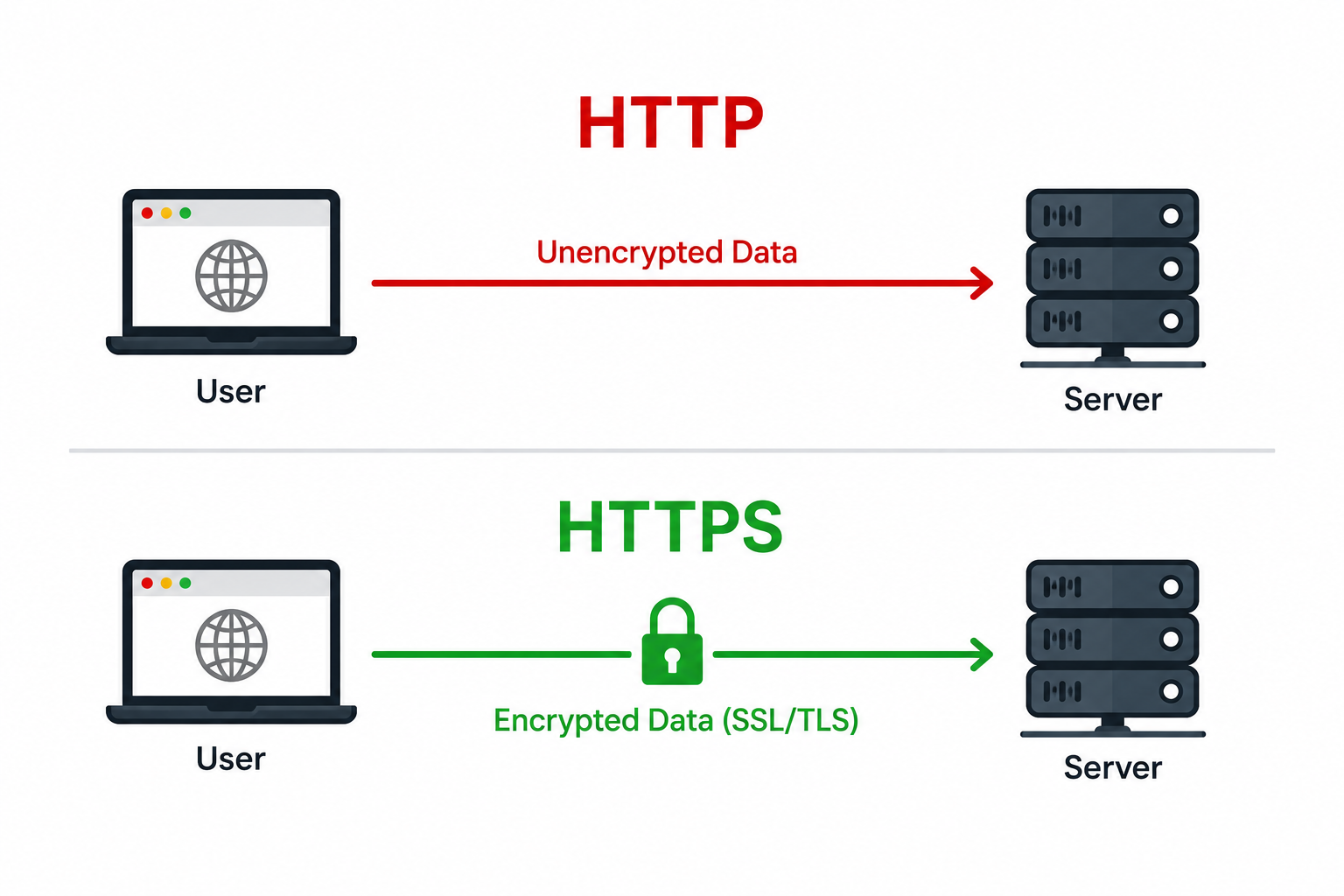
How do HTTP and HTTPS differ?
HTTP transmits data in plaintext without encryption and does not require certificates. It does not
enhance search engine ranking.
HTTPS encrypts data before transmission, using SSL certificates to secure communication. It improves search engine
ranking by providing secure connections.
What are Virtual Machines (VMs)?
In DevOps, Virtual Machines (VMs) provide isolated environments for development, testing, and deployment.
They abstract physical hardware resources, allowing multiple OS instances to run independently on a single host using
hypervisors like VirtualBox or VMware.
While VMs are popular in cloud computing and CI/CD pipelines, containers like Docker are preferred for being
lightweight, faster, and more scalable for microservices and cloud-native apps.
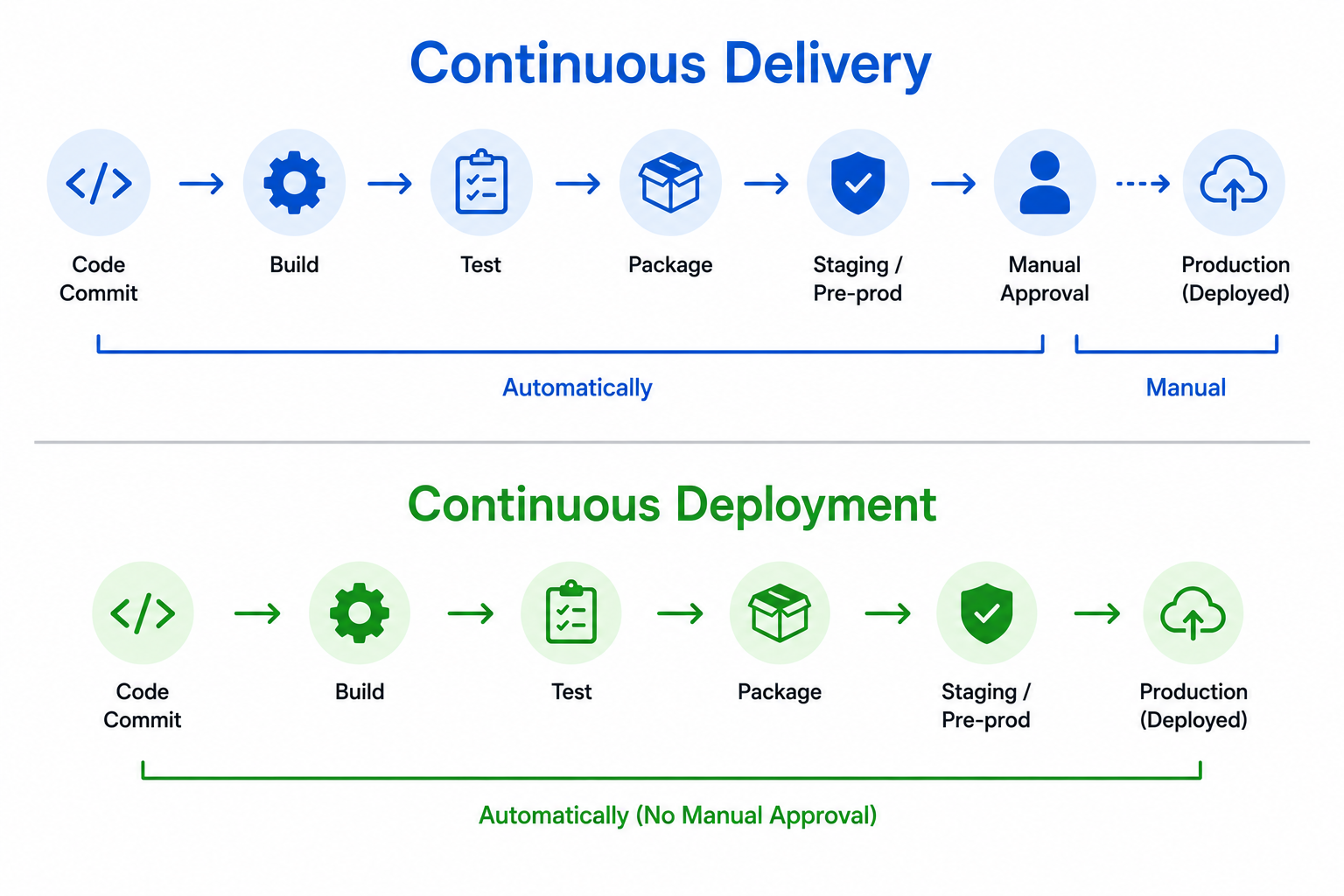
What distinguishes Continuous Deployment from Continuous Delivery?
Continuous Delivery means code is always ready for deployment, but a manual action triggers the release. It provides control over when changes go live, suitable for regulated environments. Setup is moderately difficult.
Continuous Deployment automates the entire process, deploying code immediately after passing tests. It offers fast feedback but requires robust testing and monitoring. Setup is complex but ideal for frequent updates.
What are the various phases in the DevOps methodology?
DevOps methodology consists of interconnected phases forming a cycle, not a linear path:
- Planning: Defining project goals and task organization.
- Development: Writing code and storing it in repositories.
- Continuous Integration: Automating build and test processes.
- Deployment: Automating release of software to production.
- Operations: Maintaining and managing infrastructure.
- Monitoring: Tracking performance and resolving issues.
Each phase uses specific tools like Asana, Git, Jenkins, AWS, Loggly, and Nagios to support efficient workflows.
What are DevOps antipatterns, and how can they be avoided?
Antipatterns are practices that hinder DevOps success, often focusing on short-term gains at the cost of
long-term stability.
Common antipatterns:
- Siloed teams causing delays and blame.
- Manual deployments leading to errors.
- Single-person knowledge creating risks.
- Ignoring monitoring and logs.
- Overemphasis on tools rather than culture.
Avoidance involves promoting collaboration, automation, knowledge sharing, monitoring, and fostering a strong
DevOps culture.
What does the Component-Based Model (CBM) refer to in DevOps?
The Component-Based Model (CBM) uses object-oriented technologies focusing on classes that encapsulate
data and algorithms. In CBM, these classes become reusable components used to assemble applications.
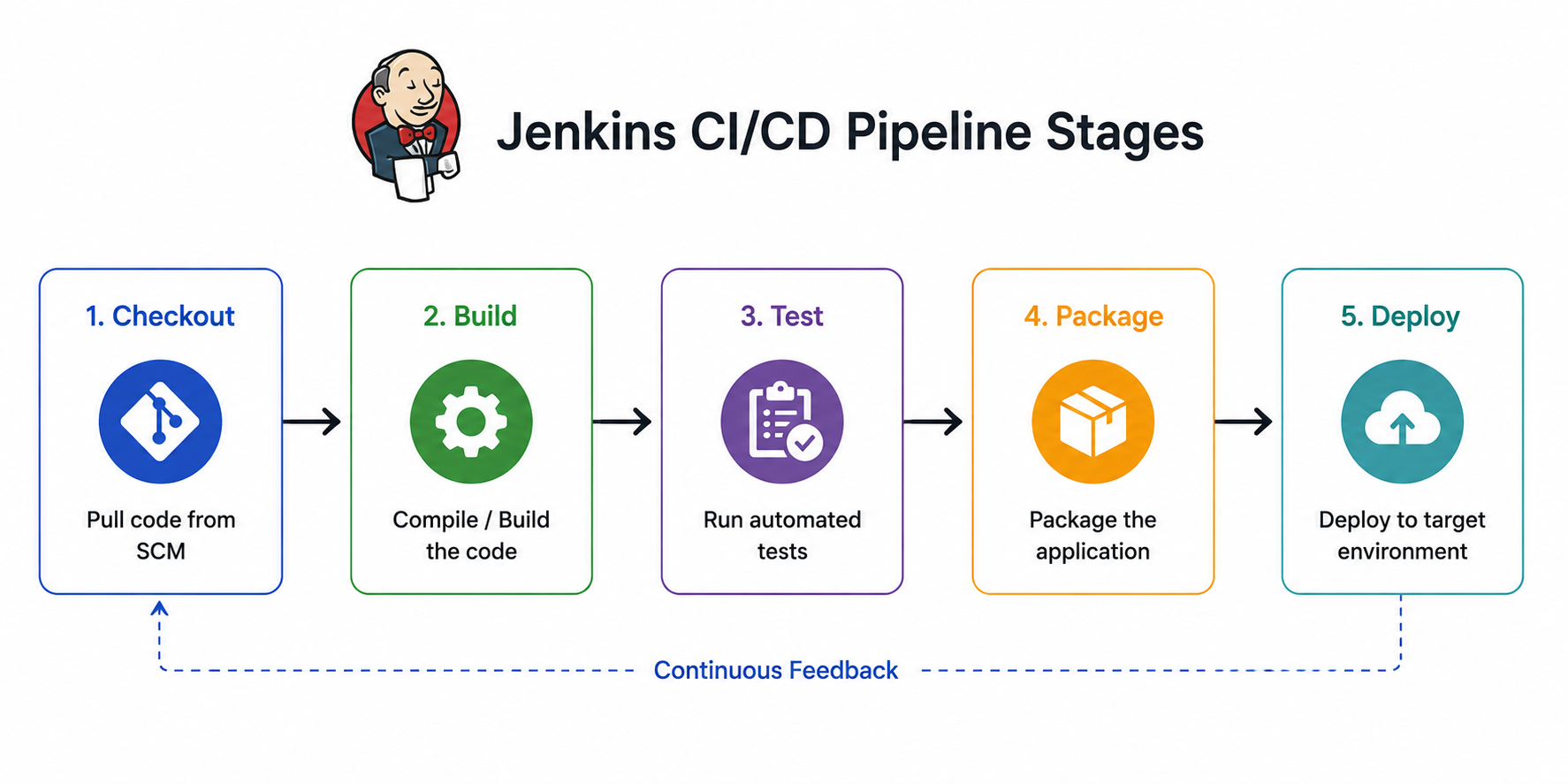
How can you create a CI/CD pipeline using Jenkins?
Creating a CI/CD pipeline in Jenkins automates building, testing, and deploying applications, boosting
productivity and quality.
Steps include:
- Installing Jenkins and necessary plugins.
- Configuring tools like JDK, Maven, Docker.
- Setting up credentials for Git and servers.
- Creating a pipeline job with defined stages: Build, Test, Deploy.
- Connecting Jenkins to Git for automatic triggers.
- Monitoring builds and securing credentials.
What are the differences between Chef and Puppet?
Chef requires Ruby programming knowledge and is common in small to medium companies. Its
communication is slower, and it lacks error visibility during installation.
Puppet uses DSL programming, favored by large enterprises. It offers faster communication and error visibility at
installation, easing setup.
What is Git rebase?
Git rebase integrates commits from one branch onto another by appending them, creating a linear, cleaner
project history. This simplifies project navigation by avoiding forks.
Syntax example:
`git rebase [-i | --interactive] [options] [--exec cmd] [--onto newbase | --keep-base] [upstream [branch]]`
What does the Selenium Tool Suite consist of?
Selenium is an open-source suite for automating web browsers and testing web applications. It includes:
- Selenium IDE
- Selenium WebDriver
- Selenium Grid
- Selenium Remote Control (deprecated)
What is Selenium IDE?
Selenium IDE is an open-source tool that records user actions on a website and replays them as automated
tests. It requires minimal programming skills, making it accessible for simple test automation.
Can you explain the Banker's Algorithm in Operating Systems?
The Banker's Algorithm is a resource allocation and deadlock avoidance method that simulates resource
requests and tests system safety before granting allocations, preventing deadlocks.
How do you back up and copy files in Jenkins?
In Jenkins, backups are created by copying the `JENKINS_HOME` directory containing configurations and
job data. Files can be copied using pipeline scripts with shell (`sh`) or batch (`bat`) commands. Plugins like
ThinBackup enable scheduled backups.
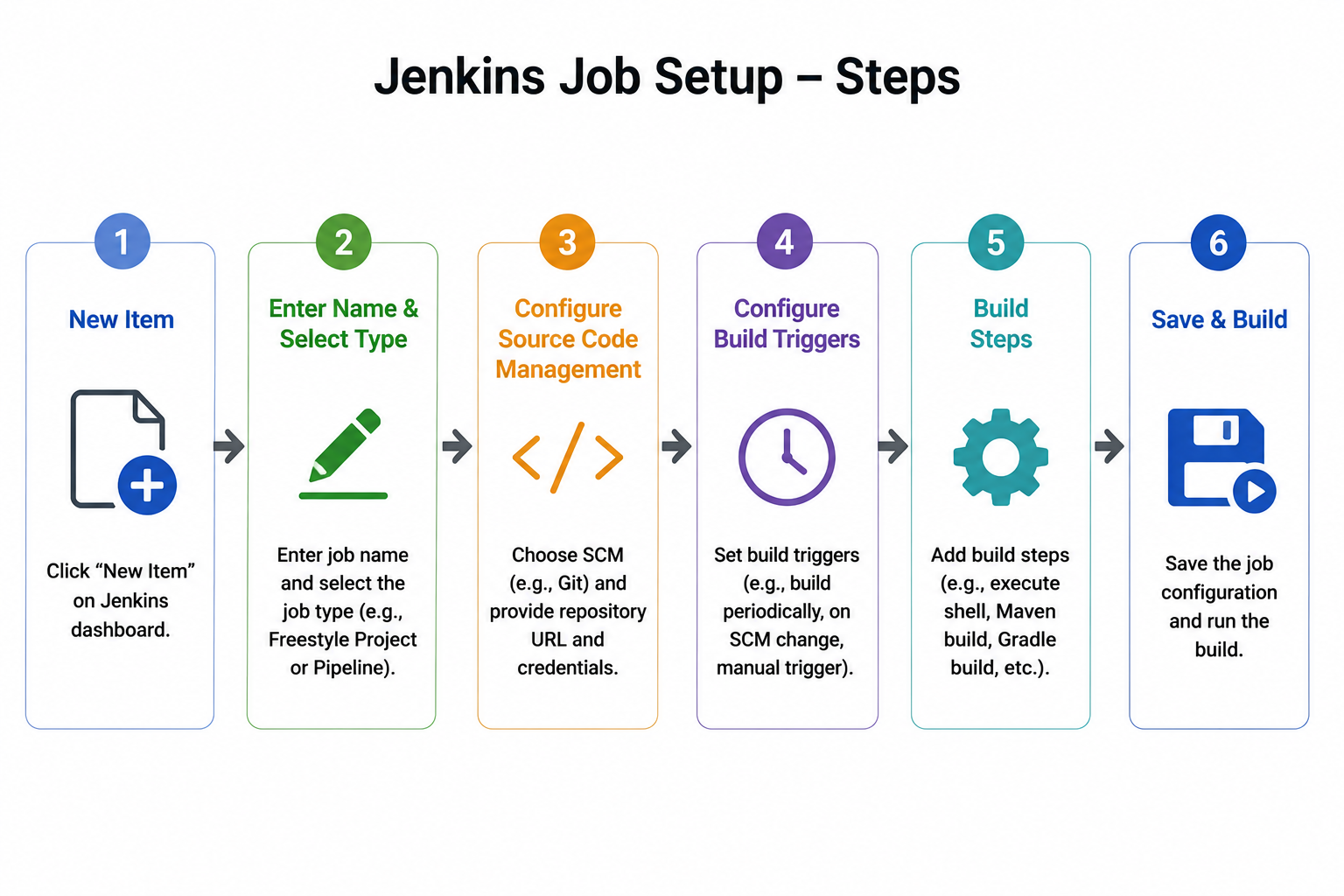
How do you set up a job in Jenkins?
To set up a Jenkins job:
- Log in to Jenkins.
- Click "New Item."
- Name the job and select its type.
- Configure source code management and triggers.
- Add build steps like shell commands.
- Save and trigger the build.
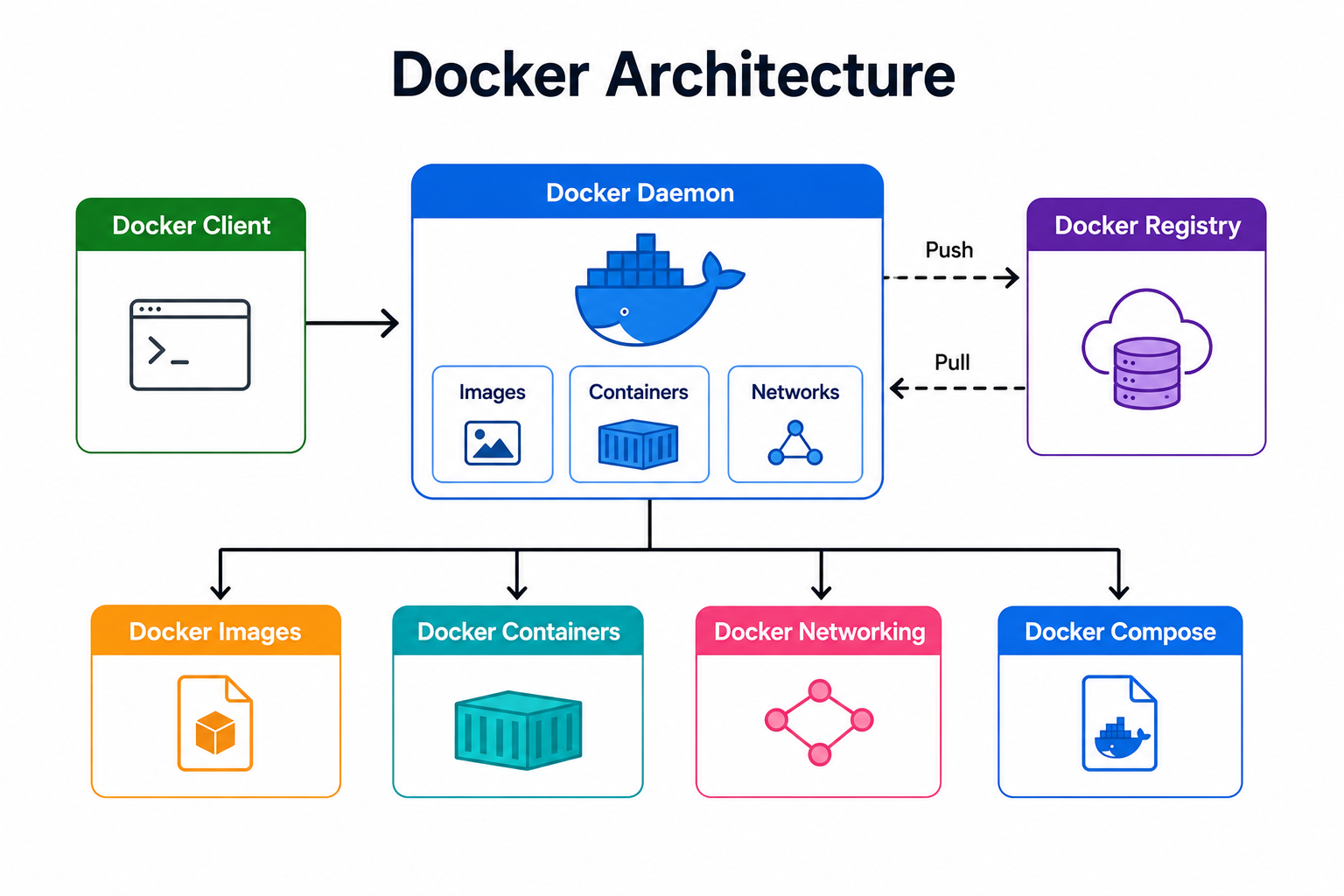
Can you describe Docker's architecture?
Docker architecture includes:
- Docker Client: CLI for issuing commands.
- Docker Daemon: Manages images, containers, networks.
- Docker Images: Read-only templates for containers.
- Docker Containers: Lightweight runnable instances.
- Docker Registry: Stores images (e.g., Docker Hub).
- Docker Compose: Defines multi-container apps.
- Docker Networking: Enables container communication.
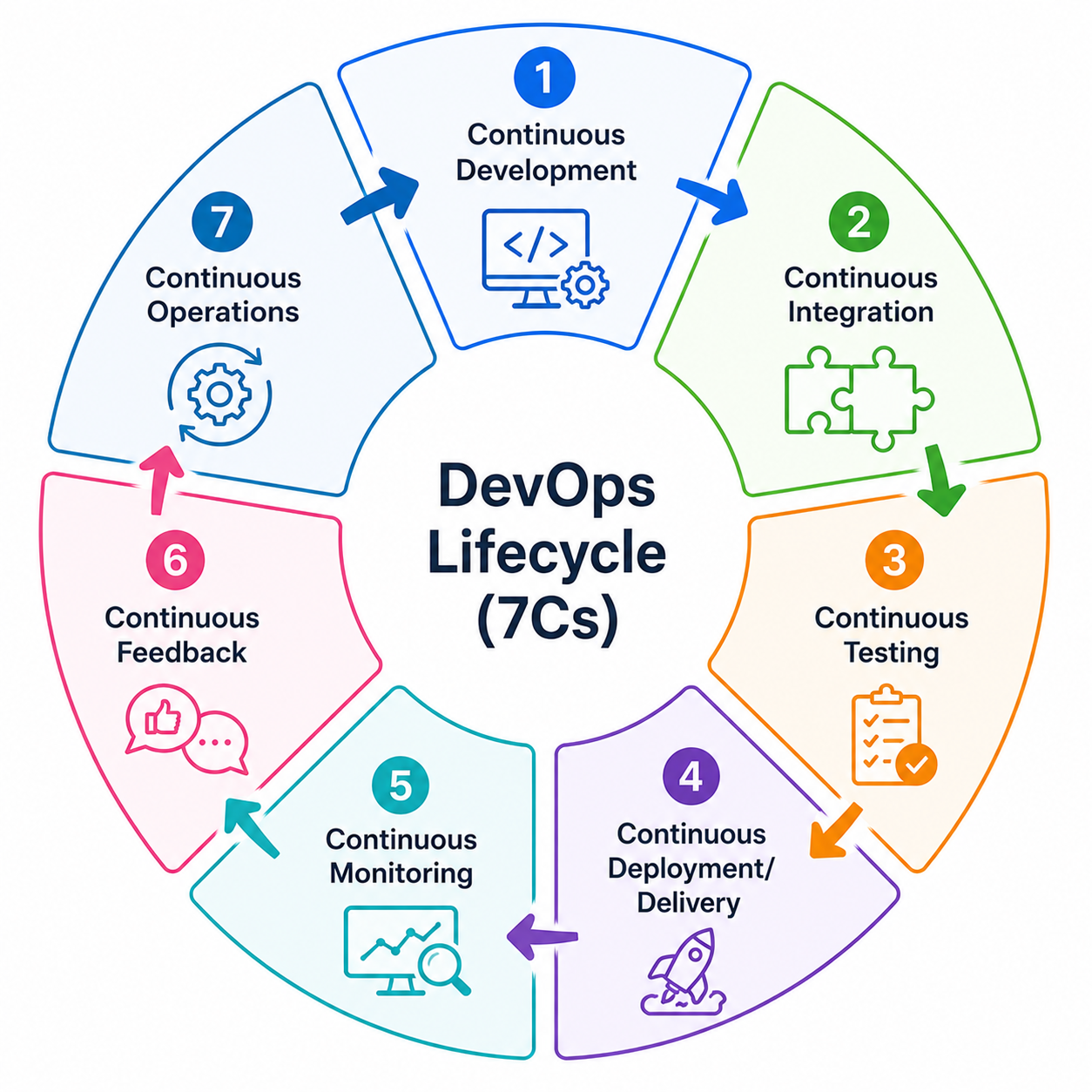
What is the life cycle of DevOps?
The DevOps lifecycle involves phases to integrate development and operations for faster software
delivery:
- Continuous Development
- Continuous Integration
- Continuous Testing
- Continuous Deployment/Delivery
- Continuous Monitoring
- Continuous Feedback
- Continuous Operations
How do Git merge and Git rebase differ?
Git Merge combines two branches preserving history and is simpler, suited for less active main
branches.
Git Rebase reapplies commits onto another base, creating a linear history but rewriting it, ideal for frequently
active main branches.
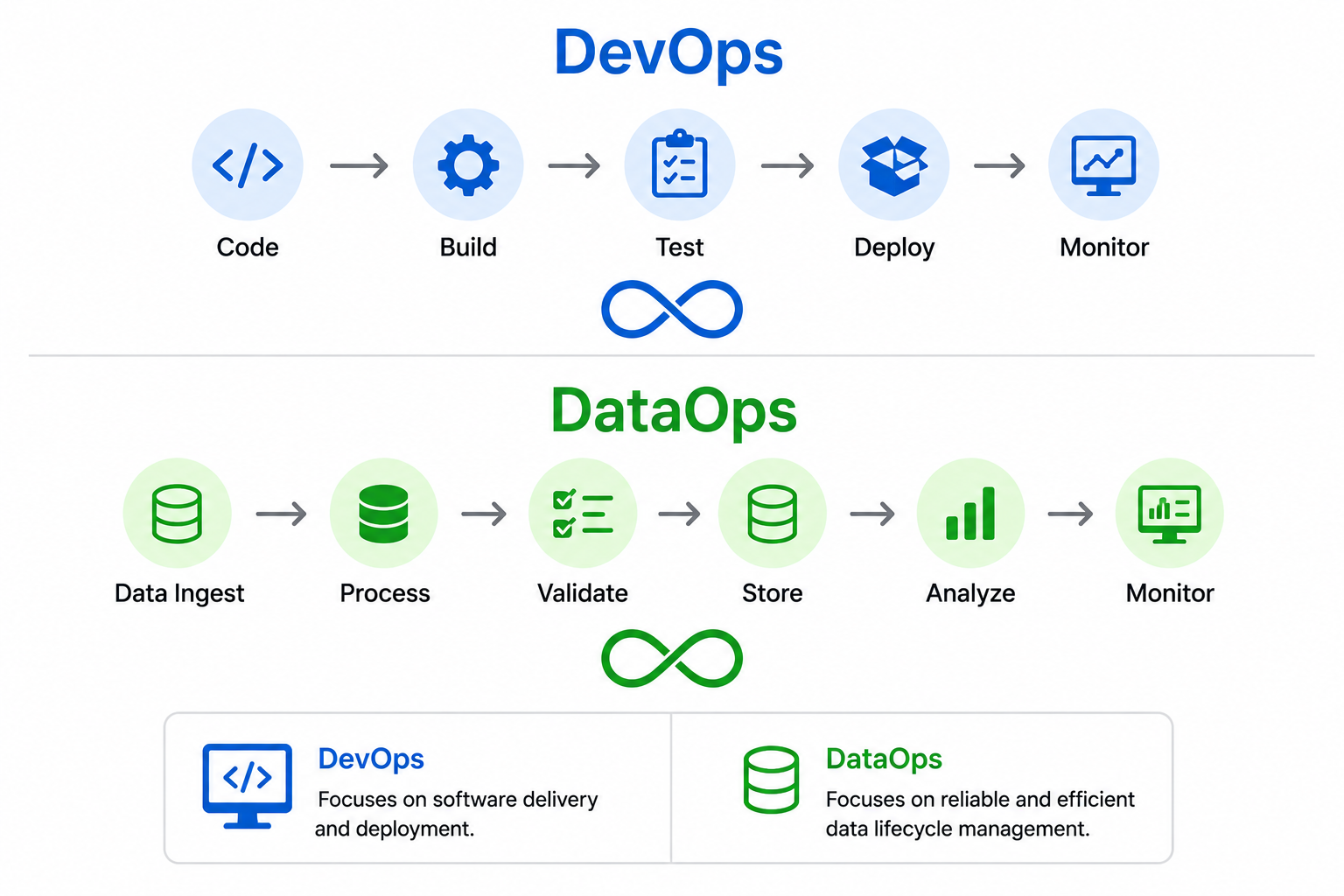
What is the difference between DataOps and DevOps?
DataOps focuses on automating data integration, governance, and delivery, enhancing data reliability
and accessibility.
DevOps emphasizes automation of software development, testing, deployment, and infrastructure management to
improve uptime and delivery speed.
What are the 7Cs of DevOps?
The 7 Cs of DevOps are:
- Continuous Integration
- Continuous Testing
- Continuous Delivery
- Continuous Deployment
- Continuous Monitoring
- Continuous Feedback
- Continuous Operations
What does the "shift left to reduce failure" concept mean in DevOps?
"Shift left" in DevOps means incorporating testing and security checks earlier in development to detect
and fix issues early, reducing failures and improving pipeline efficiency.
Can you explain Infrastructure as Code (IaC) and discuss its benefits and challenges when implemented in a large-scale production environment?
Infrastructure as Code (IaC) manages IT infrastructure via code files instead of manual setups, enabling
faster deployment, consistency, scalability, and easier management.
Benefits include automation, error reduction, and version control.
Challenges involve initial learning curves, managing complex codebases, and ensuring security and compliance in
large-scale environments.